

How to Reduce Downtime With Better Woodworking Tooling
Posted by TCStore on 2026 Jun 29th
Woodworking tooling has a direct impact on production efficiency, machine performance, product quality, and profitability. While many shops focus heavily on woodworking machinery, tooling is often the hidden factor behind excessive downtime, poor cut quality, inconsistent results, and missed deadlines.
A CNC router can only perform as well as the tooling installed in it.
The same is true for edgebanders.
Panel saws.
Drilling equipment.
Sanding systems.
And virtually every other piece of woodworking machinery.
Many production problems that appear to be machinery issues are actually tooling issues.
The good news?
Most are preventable.
Quick Answer
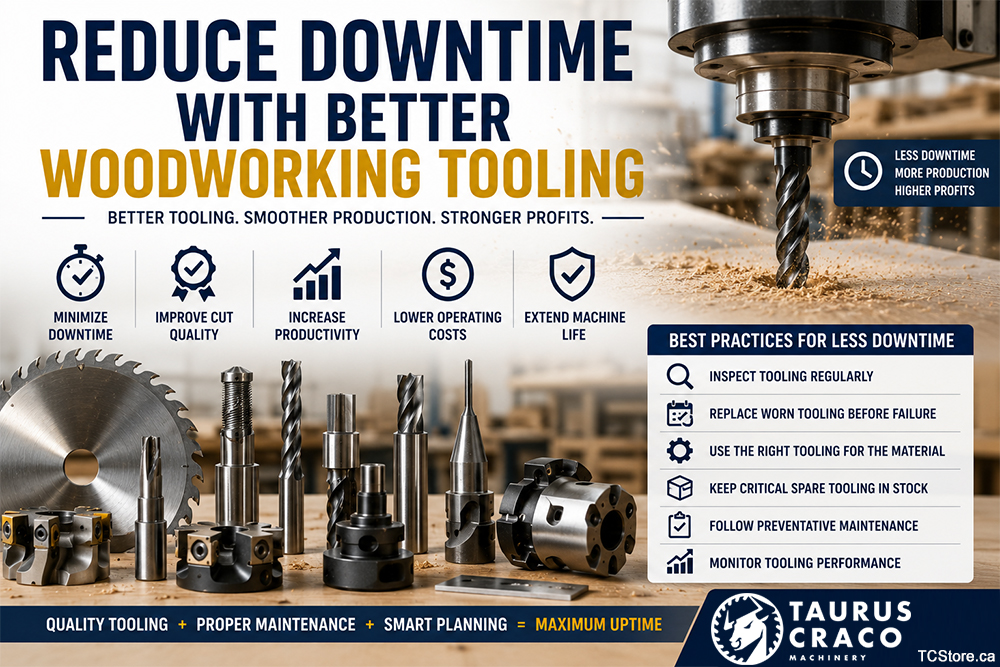
The fastest way to reduce downtime with woodworking tooling is to:
✓ Replace worn tooling before failure
✓ Use tooling designed for the specific material
✓ Keep critical spare tooling in stock
✓ Follow preventative maintenance schedules
✓ Use quality woodworking tooling from reputable suppliers
✓ Monitor tooling performance regularly
Shops that proactively manage tooling often experience less downtime, better product quality, lower operating costs, and higher production output.
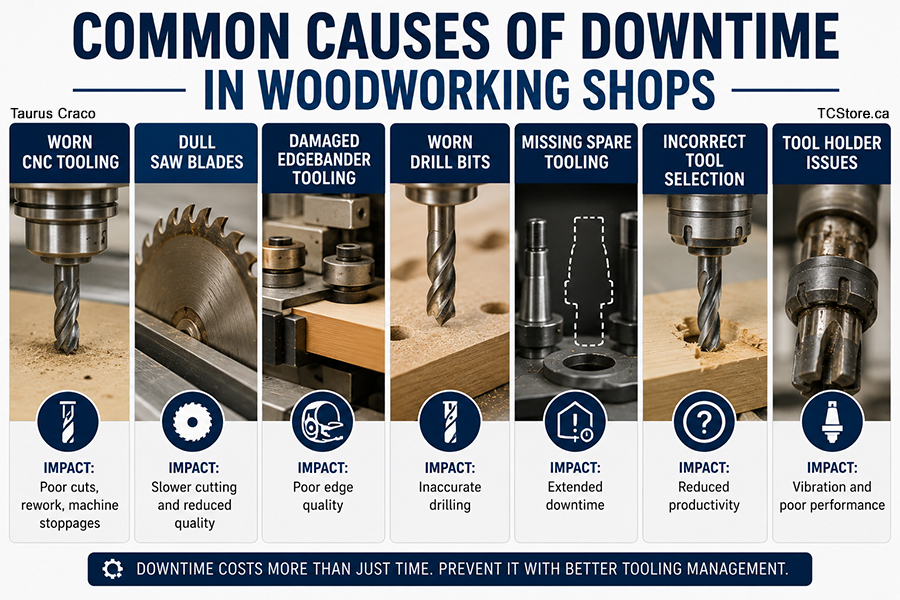
Common Causes Of Downtime In Woodworking Shops
Many shop owners assume downtime is caused by machinery breakdowns.
Often, the actual problem is tooling.
|
Cause Of Downtime |
Typical Impact |
|
Worn CNC Tooling |
Poor cuts, rework, machine stoppages |
|
Dull Saw Blades |
Slower cutting and reduced quality |
|
Damaged Edgebander Tooling |
Poor edge quality |
|
Worn Drill Bits |
Inaccurate drilling |
|
Missing Spare Tooling |
Extended downtime |
|
Incorrect Tool Selection |
Reduced productivity |
|
Tool Holder Issues |
Vibration and poor performance |
In many production environments, tooling problems create more downtime than machinery failures.
Why Woodworking Tooling Matters
Woodworking tooling is responsible for actually performing the cutting, drilling, shaping, trimming, and machining operations.
Machinery provides the platform.
Tooling performs the work.
When tooling degrades:
- Production slows
- Quality drops
- Material waste increases
- Labor costs rise
- Machine stress increases
That combination can become expensive quickly.
Benefits Of Quality Woodworking Tooling
✓ Better cut quality
✓ Faster machining speeds
✓ Reduced machine wear
✓ Lower material waste
✓ Improved consistency
✓ Higher production capacity
✓ Reduced downtime
The right tooling investment often pays for itself many times over.
How Worn Tooling Increases Downtime
Tooling rarely fails suddenly.
Most tooling problems develop gradually.
Production teams often become accustomed to declining performance without realizing it.
Common warning signs include:
- Burn marks
- Chipping
- Tear-out
- Rough edges
- Increased machine vibration
- Slower feed speeds
- Excessive dust generation
- Poor finish quality
Ignoring these warning signs usually leads to larger problems later.
Warning Signs Tooling Needs Attention
|
Symptom |
Likely Cause |
|
Burn Marks |
Dull cutting edges |
|
Chipped Material |
Worn tooling |
|
Excessive Noise |
Tool wear or damage |
|
Vibration |
Tool balance issues |
|
Reduced Feed Rates |
Dull tooling |
|
Rough Edge Finish |
Tool degradation |
Replacing tooling early often costs less than waiting for failure.
CNC Tooling And Downtime Reduction
CNC machinery represents one of the largest investments in most woodworking operations.
Yet many shops attempt to maximize tooling life far beyond reasonable limits.
That often becomes costly.
CNC Tooling Applications
- Cutting
- Grooving
- Profiling
- Drilling
- Nesting
- Shaping
Every application places wear on tooling.
Benefits Of Maintaining CNC Tooling
✓ Better accuracy
✓ Faster cycle times
✓ Reduced scrap
✓ Improved repeatability
✓ Less machine stress
✓ Fewer production interruptions
Many manufacturers discover that consistent CNC tooling replacement schedules significantly improve productivity.
Tooling Inventory: One Of The Most Overlooked Areas
Many woodworking businesses operate without adequate spare tooling inventory.
This creates unnecessary risk.
A single broken tool can stop production.
A replacement may not be available immediately.
This results in:
- Lost production
- Missed deadlines
- Expedited shipping costs
- Employee downtime
Critical Tooling To Keep In Stock
✓ CNC router bits
✓ Saw blades
✓ Drill bits
✓ Edgebander knives
✓ Insert tooling
✓ Tool holders
✓ Collets
✓ Dust collection accessories
Having backup tooling often costs far less than unexpected downtime.
Which Woodworking Tooling Causes The Most Downtime?
Not all tooling failures have the same impact.
|
Tooling Category |
Downtime Risk |
|
CNC Router Bits |
██████████ |
|
Saw Blades |
█████████ |
|
Drill Bits |
███████ |
|
Edgebander Tooling |
███████ |
|
Tool Holders |
██████ |
|
Sanding Supplies |
█████ |
CNC tooling and saw blades typically have the greatest influence on production capacity.
Choosing The Right Tooling For The Material
One of the most common mistakes is using the wrong tooling for the material being processed.
Different materials require different tooling geometries.
Common Materials
- MDF
- Melamine
- Plywood
- Hardwood
- Softwood
- Laminates
- Composite panels
Using incorrect tooling often leads to:
X Premature wear
X Poor finish quality
X Increased downtime
X Excessive heat generation
X Material damage
Tooling should always match the application.
Tooling Maintenance Best Practices
Preventative maintenance dramatically reduces downtime.
Simple maintenance procedures can significantly extend tooling life.
Recommended Practices
✓ Inspect tooling daily
✓ Clean tooling regularly
✓ Monitor cutting quality
✓ Track tool life
✓ Replace damaged tooling immediately
✓ Store tooling properly
✓ Balance tooling when required
Many shops focus heavily on machinery maintenance while overlooking tooling maintenance.
That is often a mistake.
Tooling Costs vs Downtime Costs
Some businesses hesitate to replace tooling because of cost.
However, downtime is often far more expensive.
Example Comparison
|
Cost Category |
Typical Cost |
|
Replacement CNC Tool |
$100 - $500 |
|
Replacement Saw Blade |
$100 - $300 |
|
One Hour Of Production Downtime |
Hundreds To Thousands |
|
Missed Delivery Penalty |
Potentially Significant |
|
Lost Production Opportunity |
Often Much Higher |
Trying to save money on tooling can become expensive very quickly.
Benefits Of Premium Woodworking Tooling
Not all tooling is created equally.
Premium tooling often delivers measurable benefits.
Benefits Include
✓ Longer tool life
✓ Better cut quality
✓ Reduced downtime
✓ Faster machining
✓ Lower scrap rates
✓ More consistent performance
While premium tooling may cost more initially, total operating costs are often lower.
Industries That Depend On High-Performance Tooling
|
Industry |
Common Tooling Requirements |
|
Cabinet Manufacturing |
CNC tooling, saw blades, drill bits |
|
Furniture Manufacturing |
CNC tooling, shaping tools |
|
Architectural Millwork |
Profile tooling, CNC cutters |
|
Closet Manufacturing |
Drilling and cutting tooling |
|
Retail Fixtures |
CNC router tooling |
|
Commercial Millwork |
Precision tooling systems |
Across every industry, tooling directly impacts production performance.
What Not To Do
Many tooling problems are preventable.
Common Mistakes
X Running tooling until complete failure
X Buying based solely on price
X Using the wrong tooling for the material
X Failing to keep spare tooling inventory
X Ignoring wear indicators
X Neglecting tooling maintenance
X Using damaged tool holders
X Delaying replacements
These decisions often increase downtime rather than reduce costs.
Buying Considerations For Woodworking Tooling
Before purchasing woodworking tooling, ask:
|
Question |
Why It Matters |
|
What materials are being processed? |
Determines tooling selection |
|
What machinery is being used? |
Impacts compatibility |
|
What production volume exists? |
Affects tooling durability needs |
|
Is tooling readily available? |
Reduces downtime risk |
|
Are replacement parts stocked? |
Improves responsiveness |
|
Is technical support available? |
Helps optimize performance |
The best tooling strategy balances performance, availability, and cost.
Benefits Of Reducing Downtime Through Better Tooling
✓ Higher production output
✓ Better machine utilization
✓ Improved product quality
✓ Lower labor costs
✓ Reduced material waste
✓ Better customer satisfaction
✓ Stronger profitability
✓ More predictable production schedules
For many woodworking businesses, improving tooling management is one of the fastest ways to improve efficiency.
Final Thoughts
Woodworking tooling plays a much larger role in production performance than many businesses realize.
The right tooling helps reduce downtime, improve quality, increase throughput, and protect valuable woodworking machinery.
Rather than viewing tooling as a consumable expense, successful manufacturers view it as a productivity investment.
Many woodworking businesses work with suppliers such as TCStore to source woodworking tooling, saw blades, CNC tooling, edgebander supplies, drilling solutions, sanding products, and replacement parts that help keep production running efficiently.
FAQ
How does woodworking tooling reduce downtime?
Quality woodworking tooling improves cutting performance, reduces failures, and helps prevent unexpected production interruptions.
What tooling causes the most downtime in woodworking shops?
CNC tooling, saw blades, drill bits, and edgebander tooling are among the most common sources of production downtime when they become worn or damaged.
How often should woodworking tooling be replaced?
Replacement intervals vary depending on material type, production volume, and tooling quality. Monitoring performance is often the best indicator.
Is premium woodworking tooling worth the cost?
Many shops find premium woodworking tooling delivers longer life, better quality, reduced downtime, and lower overall operating costs.
Where can I buy woodworking tooling and replacement parts?
Many woodworking businesses source tooling, saw blades, CNC cutters, sanding supplies, edgebander parts, and replacement components through suppliers such as TCStore.