

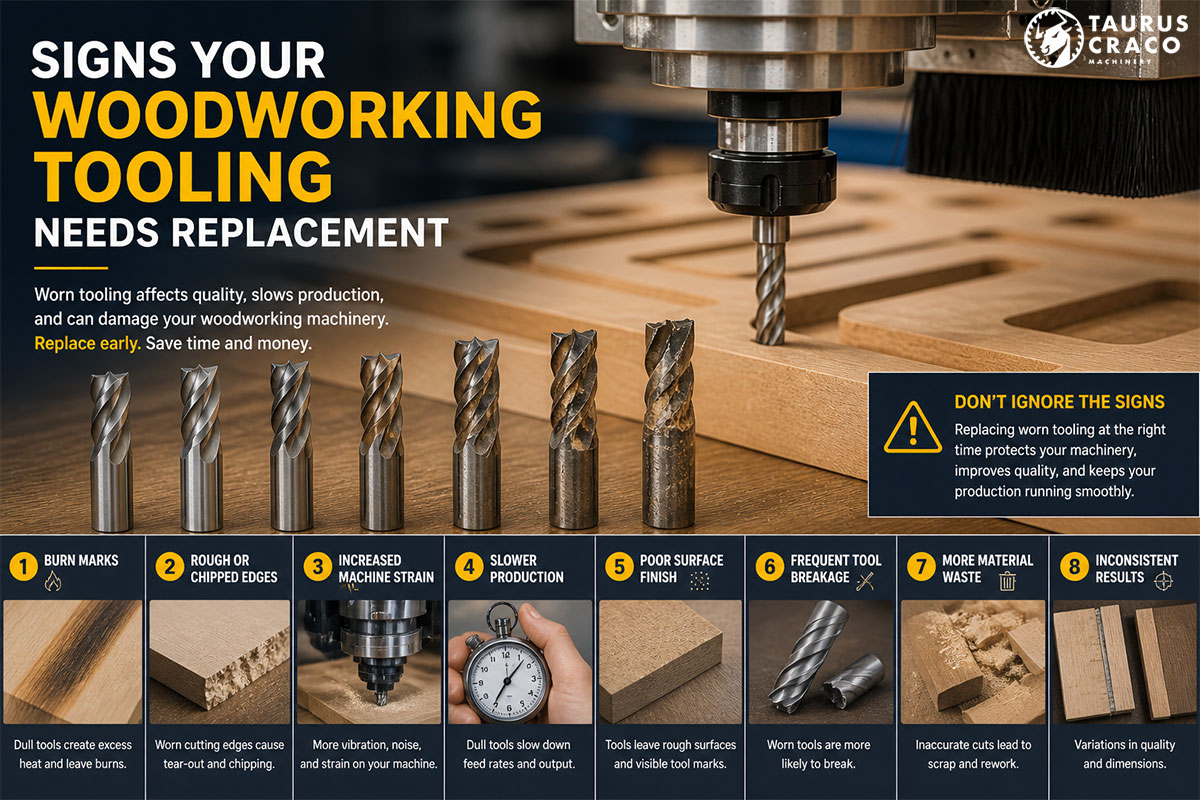
Signs Your Woodworking Tooling Needs Replacement
Posted by TCStore on 2026 May 21st
In any woodworking operation, tooling is one of the most important factors behind performance, precision, and efficiency. Whether you’re working with CNC routers, saws, drilling systems, or other woodworking machinery, your results are only as good as the tools you use. Over time, even the highest-quality woodworking tooling wears down, and knowing when to replace it is critical for maintaining production standards.
Many shops invest heavily in new woodworking machinery or carefully source used woodworking machinery, but overlook the importance of maintaining and replacing tooling at the right time. Worn tools can reduce quality, slow production, increase costs, and even damage your woodworking machinery equipment.
This guide outlines the most common signs that your woodworking tooling needs replacement and why acting early can save time and money.
Why Tooling Replacement Matters
Tooling is a consumable asset. It is designed to wear down over time through repeated use. Ignoring worn tools can create a chain reaction of issues throughout your shop.
Replacing worn woodworking tooling helps:
- Maintain cut accuracy and finish quality
- Reduce strain on woodworking machinery
- Improve production speed and efficiency
- Prevent costly machine damage
- Reduce material waste and rework
- Maintain consistent output across jobs
For shops looking to stay competitive, timely tooling replacement is just as important as choosing the right equipment when you buy woodworking machinery.
1. Burn Marks on Materials
One of the most obvious signs of worn woodworking tooling is burn marks on the material. This typically happens when the cutting edge is dull and generates excess heat instead of making a clean cut.
Common causes include:
- Dull cutting edges
- Improper feed rates combined with worn tools
- Increased friction during cutting
Burn marks are not just cosmetic issues. They can affect finishing, increase sanding time, and reduce product quality. If you notice consistent burning, it is likely time to replace your tooling.
2. Rough or Chipped Edges
Clean edges are a sign of sharp, high-quality woodworking tooling. When tools begin to wear down, cuts become rough, uneven, or chipped.
This is especially noticeable when working with:
- Plywood
- Laminates
- Veneered materials
- MDF and particle board
Poor edge quality often leads to additional finishing work or rejected parts. Replacing worn tools helps restore clean, precise cuts and improves overall efficiency.
3. Increased Machine Strain
Worn woodworking tooling does not cut efficiently. Instead, it forces your woodworking machinery equipment to work harder to achieve the same result.
Signs of increased strain include:
- Higher vibration during operation
- Unusual noise from the machine
- Reduced cutting efficiency
- Increased spindle load
Over time, this extra strain can lead to wear on machine components, higher maintenance costs, and potential downtime. Replacing tooling early helps protect your investment in both new woodworking machinery and used woodworking machinery.
4. Slower Production Speeds
When tooling is sharp and properly maintained, machines can operate at optimal speeds. As tools wear down, cutting becomes less efficient, and operators may need to slow down feed rates to maintain quality.
This results in:
- Longer cycle times
- Reduced throughput
- Lower overall productivity
If your shop is experiencing slower production without a clear reason, worn woodworking tooling may be the cause.
5. Poor Surface Finish
Surface finish is critical in woodworking, especially for visible components such as cabinetry, furniture, and millwork. Worn tools can leave behind rough surfaces, tool marks, or uneven finishes.
This leads to:
- More sanding and finishing work
- Increased labor costs
- Reduced product quality
- Higher rejection rates
Replacing woodworking tooling at the right time helps maintain consistent surface quality and reduces post-processing work.
6. Frequent Tool Breakage
As tooling wears down, it becomes more fragile and prone to breakage. This is especially true for smaller diameter tools or tools used in high-speed CNC applications.
Frequent breakage can:
- Interrupt production
- Damage workpieces
- Increase tooling costs
- Create safety concerns
If tools are breaking more often than usual, it may be a sign that your woodworking tooling has reached the end of its usable life.
7. Increased Material Waste
Worn tooling can lead to inaccurate cuts, poor edge quality, and inconsistent dimensions. This often results in higher material waste.
Signs include:
- More rejected parts
- Inconsistent measurements
- Poor fit during assembly
- Increased scrap rates
Reducing waste is a key goal for any shop using woodworking machinery equipment, and proper tooling maintenance plays a major role in achieving it.
8. More Frequent Maintenance Issues
Tooling that is no longer performing properly can contribute to additional maintenance needs across your shop. Dust buildup, vibration, and uneven cutting can all affect machine performance.
Replacing worn woodworking tooling helps:
- Reduce machine downtime
- Improve overall reliability
- Maintain consistent operation
- Lower long-term maintenance costs
This is especially important for high-production environments.
9. Inconsistent Results Across Jobs
Consistency is one of the biggest advantages of CNC and modern woodworking machinery. When results start to vary between jobs, tooling is often the cause.
Inconsistent tooling performance can lead to:
- Variations in cut quality
- Differences in dimensions
- Unpredictable results
Replacing tools ensures that your machines continue to deliver consistent, repeatable output.
How Often Should You Replace Woodworking Tooling?
There is no single answer for how often woodworking tooling should be replaced. It depends on factors such as:
- Material type
- Production volume
- Tool quality
- Machine settings
- Maintenance practices
However, regular inspection is key. Monitoring performance and replacing tools at the first signs of wear helps maintain efficiency and quality.
Investing in High-Quality Tooling
When you buy woodworking tooling, quality matters. Higher-quality tools may cost more upfront but often last longer and deliver better performance.
Benefits of investing in quality tooling include:
- Longer tool life
- Improved cut quality
- Reduced downtime
- Lower long-term costs
- Better compatibility with woodworking machinery
Working with a trusted supplier ensures you have access to reliable tooling for both new woodworking machinery and used woodworking machinery.
Final Thoughts
Your woodworking tooling plays a critical role in the performance of your entire operation. Worn tools can affect quality, efficiency, and machine health, while well-maintained tooling supports consistent, high-quality production.
Recognizing the signs of worn tooling and replacing it at the right time helps protect your investment in woodworking machinery equipment, reduce waste, and maintain productivity.
For any shop serious about performance and quality, staying on top of tooling replacement is not optional. It is a key part of running a successful woodworking business.
Frequently Asked Questions About Woodworking Tooling Replacement
1. How do I know when to replace woodworking tooling?
You should replace woodworking tooling when you notice signs such as burn marks, rough edges, slower cutting speeds, or increased machine strain.
2. Can worn tooling damage woodworking machinery?
Yes, worn woodworking tooling can put extra strain on woodworking machinery equipment, leading to increased wear and potential damage over time.
3. Does tooling affect production speed?
Yes, sharp woodworking tooling allows machines to operate at optimal speeds, while worn tools often require slower feed rates and reduce efficiency.
4. Is it better to repair or replace woodworking tooling?
In most cases, replacing worn woodworking tooling is more effective than trying to repair it, especially in high-production environments.
5. Where can I buy woodworking tooling?
You can buy woodworking tooling from specialized suppliers that offer high-quality products compatible with both new woodworking machinery and used woodworking machinery, along with expert support.