

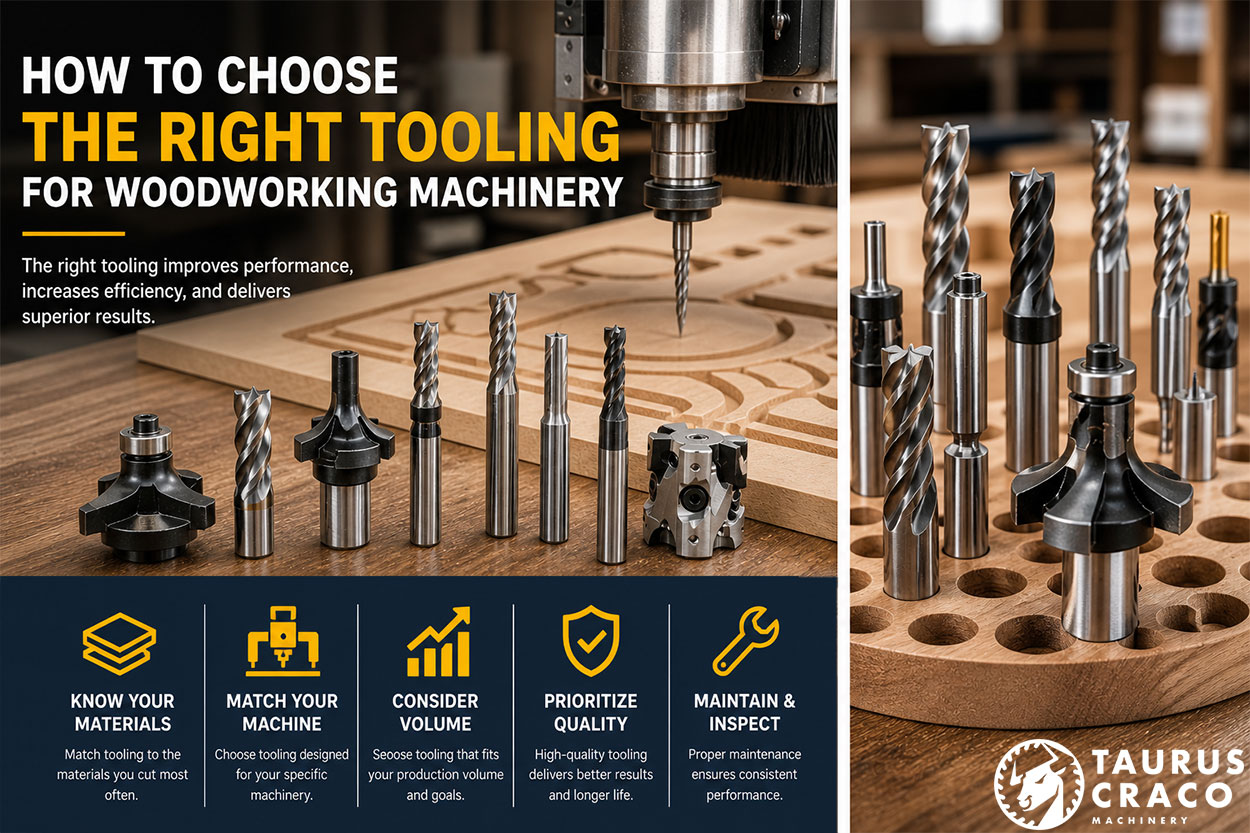
How to Choose the Right Tooling for Woodworking Machinery
Posted by TCStore on 2026 May 11th
Choosing the right woodworking tooling is one of the most important decisions for any shop working with woodworking machinery. Whether you are running CNC routers, panel saws, edgebanders, or drilling systems, the tooling you use directly affects performance, efficiency, product quality, and long-term costs.
Many businesses focus heavily on selecting the right woodworking machinery equipment, whether it is new woodworking machinery or used woodworking machinery. However, even the best machine will underperform if paired with the wrong tooling. The right tools ensure clean cuts, faster production, reduced waste, and longer machine life.
This guide will walk through how to properly select woodworking tooling based on your applications, materials, and production goals.
Why Tooling Selection Matters
Tooling is the direct point of contact between your machine and the material. It determines how efficiently your woodworking machinery operates and how clean your final product looks.
The right woodworking tooling helps:
- Improve cut quality and accuracy
- Reduce material waste
- Increase production speed
- Minimize machine wear
- Lower long-term operating costs
- Maintain consistent results across projects
For shops looking to buy woodworking machinery, tooling should always be part of the decision-making process.
Start with Your Material Type
The first step in choosing the right woodworking tooling is understanding the materials you work with most often. Different materials require different cutting approaches.
Common material considerations:
- MDF and particle board
Requires tooling that minimizes tear-out and handles fine dust efficiently. - Plywood
Needs clean-cutting tools to prevent splintering on both surfaces. - Hardwood
Requires durable tooling that can withstand higher density and resistance. - Laminates and composites
Benefit from specialized tooling designed for clean edges and reduced chipping.
Matching your tooling to your materials ensures better performance and protects your woodworking machinery equipment.
Match Tooling to Your Machine Type
Different machines require different types of woodworking tooling. Choosing tooling that is compatible with your equipment is essential for efficiency and safety.
CNC Machines
CNC systems require precision tooling such as:
- Router bits
- Compression cutters
- Drill bits
- Engraving tools
- Insert tooling
These tools must match spindle speed, feed rates, and cutting depth for optimal results.
Panel Saws
Panel saws use specialized blades designed for clean, straight cuts. Blade selection affects cut quality, especially when working with laminates and veneers.
Edgebanders
Edgebanders rely on trimming and finishing tools that create smooth, professional edges. Tool sharpness and precision are critical.
Drilling and Boring Machines
These machines require accurate drilling tools for consistent hole placement and clean finishes.
When you buy woodworking tooling, always ensure compatibility with your specific woodworking machinery.
Consider Production Volume
The volume of work your shop handles plays a major role in tooling selection. A small custom shop may prioritize flexibility, while a high-volume production facility needs durability and efficiency.
For high-volume operations:
- Use long-life tooling materials
- Consider insert tooling for quick replacements
- Focus on tools that reduce downtime
- Prioritize consistent performance
For lower-volume or custom work:
- Choose versatile tooling
- Focus on flexibility and precision
- Invest in a range of tool types for different applications
The right woodworking tooling supports both your current production needs and future growth.
Solid Tooling vs Insert Tooling
One of the key decisions when selecting woodworking tooling is choosing between solid tools and insert tooling.
Solid Tooling
- Made from a single piece of material
- Lower upfront cost
- Suitable for lighter or less frequent use
Insert Tooling
- Uses replaceable cutting edges
- Longer lifespan overall
- Faster maintenance and tool changes
- Ideal for high-production environments
Many shops running woodworking machinery equipment at scale prefer insert tooling because it reduces downtime and long-term costs.
Tool Geometry and Coatings Matter
The shape and coating of your tools can significantly affect performance. Tool geometry determines how the tool interacts with the material, while coatings can extend tool life.
Important factors include:
- Cutting angle
- Flute design
- Chip removal efficiency
- Heat resistance
- Wear resistance
Advanced coatings help reduce friction and extend the lifespan of woodworking tooling, especially when working with abrasive materials.
Signs You Chose the Wrong Tooling
Choosing the wrong woodworking tooling can quickly lead to production issues. Recognizing these signs early can help prevent damage and inefficiency.
Watch for:
- Rough or uneven cuts
- Burn marks on materials
- Excessive noise or vibration
- Increased machine strain
- Frequent tool replacement
- Slower production speeds
If these issues appear, it may be time to reassess your tooling selection.
Cost vs Long-Term Value
When businesses buy woodworking tooling, it is common to compare prices. However, focusing only on upfront cost can lead to higher expenses over time.
Higher-quality tooling often provides:
- Longer lifespan
- Better performance
- Fewer replacements
- Reduced downtime
- Improved product quality
This makes it a better investment, especially for shops running new woodworking machinery or high-value woodworking machinery equipment.
Work with a Trusted Supplier
Selecting the right supplier is just as important as choosing the right tools. A reliable supplier can help you identify the best woodworking tooling for your applications and provide ongoing support.
A strong supplier should offer:
- A wide range of tooling options
- Expertise in woodworking applications
- Access to replacement parts and inserts
- Guidance for both new woodworking machinery and used woodworking machinery
- Consistent product availability
Working with a trusted partner helps ensure long-term success.
Tool Maintenance and Storage
Proper maintenance is essential for getting the most out of your woodworking tooling. Even the best tools will underperform if they are not maintained correctly.
Best practices include:
- Regular cleaning to remove resin and buildup
- Proper storage to prevent damage
- Routine inspection for wear
- Timely replacement of worn tools
- Using correct cutting speeds and feeds
Maintaining your tooling helps protect both your investment and your woodworking machinery.
Final Thoughts
Choosing the right woodworking tooling is essential for maximizing the performance of your woodworking machinery. The right tools improve efficiency, reduce waste, and support consistent, high-quality production.
Whether you are working with used woodworking machinery or investing in new woodworking machinery, tooling plays a critical role in achieving the best results. By selecting high-quality tools, matching them to your materials and machines, and maintaining them properly, you can create a more efficient and profitable operation.
For businesses looking to scale and stay competitive, making smart decisions when you buy woodworking tooling is one of the most valuable steps you can take.
Frequently Asked Questions About Woodworking Tooling
How do I choose the right woodworking tooling for my shop?
To choose the right woodworking tooling, consider your materials, machine type, production volume, and desired finish quality. Matching tooling to your specific applications is key.
Does tooling affect woodworking machinery performance?
Yes, woodworking tooling directly affects the performance of woodworking machinery equipment, including speed, accuracy, and machine wear.
Is insert tooling better than solid tooling?
Insert woodworking tooling is often better for high-volume production because it allows for quick replacements and longer overall tool life.
Can I use the same tooling for different materials?
While some woodworking tooling is versatile, it is best to use tools designed for specific materials to achieve optimal performance and avoid damage.
Where can I buy woodworking tooling?
You can buy woodworking tooling from specialized suppliers that offer tools compatible with both new woodworking machinery and used woodworking machinery, along with expert support.