

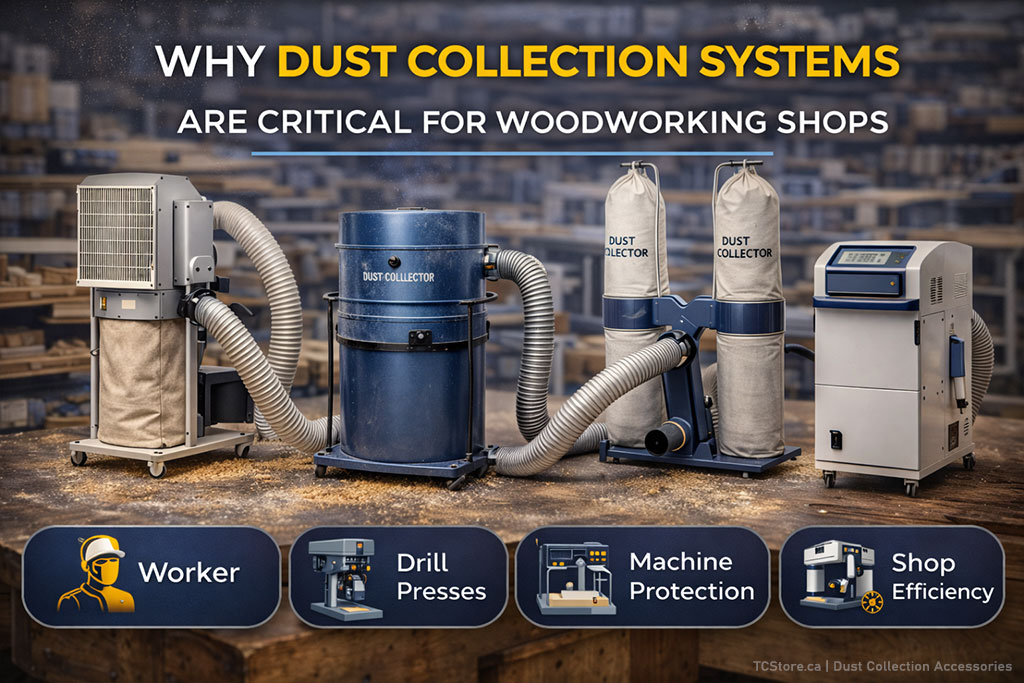
Why Dust Collection Systems Are Critical for Woodworking Shops
Posted by TCStore on 2026 Apr 16th
Dust is one of the most common and most underestimated challenges in a woodworking shop. It is easy to think of sawdust and fine particles as just part of the job, but over time, dust can affect far more than housekeeping. It can impact worker safety, equipment performance, product quality, and overall shop efficiency. That is why dust collection accessories are not just helpful additions to a shop. They are critical equipment for any serious woodworking operation.
Whether a business produces cabinetry, furniture, millwork, panels, or custom wood products, proper dust collection systems help create a cleaner, safer, and more productive environment.
Dust Is More Than a Mess
In many shops, dust is first noticed on surfaces, floors, and machinery. But the real issue is often the fine airborne dust that is less visible. These small particles can remain in the air long after cutting, sanding, routing, and shaping tasks are complete.
Without proper dust collection systems, woodworking shops can face problems such as:
- Reduced air quality throughout the shop
- Dust buildup on machinery and work surfaces
- Increased cleanup time
- Higher wear on equipment
- Lower product finish quality
- Greater health and safety concerns for workers
What seems like a small daily issue can become a major operational problem when dust is not controlled properly.
Dust Collection Systems Help Protect Worker Health
One of the biggest reasons dust collection systems are so important is worker health. Wood dust can become airborne quickly, especially during sanding, cutting, and machining. Over time, breathing in these particles can create an unhealthy work environment.
A cleaner air environment matters because employees spend long hours in the shop each day. Fine dust does not just affect comfort. It can also make the shop feel stuffy, dirty, and less professional.
By using effective dust collection systems, woodworking businesses help reduce airborne particles at the source. This creates a cleaner workspace and supports better overall air quality for the people working in it.
Cleaner Shops Improve Productivity
A dusty shop is often a slower shop. When dust collects on surfaces, equipment, and materials, workers spend more time cleaning, wiping down parts, and maintaining work areas. Dust can also interfere with measurement accuracy, finishing quality, and general workflow.
Well-designed dust collection systems help reduce this daily disruption by pulling dust away during production rather than leaving it behind for cleanup later.
A cleaner shop can help teams:
- Spend less time on cleanup
- Keep production stations more organized
- Move materials through the workflow more efficiently
- Reduce interruptions caused by excess dust buildup
- Maintain a more professional work environment
This leads to better use of labor and a more efficient production floor.
Dust Collection Systems Help Protect Machinery
Woodworking machinery performs best when it stays clean and properly maintained. Dust buildup on motors, moving parts, control areas, and surrounding workstations can contribute to wear, clogging, and maintenance issues over time.
This is another reason why dust collection systems are so valuable. They do more than clean the air. They also help protect the equipment that keeps the business running.
Dust control helps support:
- Cleaner machine surfaces
- Less buildup around moving parts
- Reduced strain caused by packed dust and debris
- Easier routine maintenance
- Longer-term equipment reliability
For shops that rely on CNC equipment, sanders, saws, routers, and edgebanders, keeping dust under control can support better machine performance over time.
Better Product Quality Starts with a Cleaner Environment
Dust can also affect the quality of finished work. When dust settles on panels, parts, or finishing surfaces, it can create issues during assembly, painting, coating, or final inspection. Even small particles can interfere with a clean finish and lead to rework.
Strong dust collection systems help reduce these problems by capturing particles closer to the source. This creates a cleaner production environment and supports better consistency in finished products.
For woodworking shops focused on quality, cleaner air and cleaner surfaces are not optional. They are part of producing professional results.
Dust Collection Systems Support Shop Safety
Safety is another major reason to invest in proper dust collection systems. Excess dust on floors and around machines can create slippery conditions, cluttered work areas, and more difficult cleanup. In busy production environments, that can increase the risk of avoidable problems.
A cleaner shop supports:
- Better visibility around workstations
- Cleaner walkways and production areas
- Less loose debris underfoot
- Safer, more organized machine zones
While dust collection is often discussed in terms of air quality, its effect on general shop safety is also important.
Choosing the Right Dust Collection Systems
Not every shop needs the exact same setup. The right dust collection systems depend on several factors, including shop size, machine count, production type, and how much dust is being generated.
A few key considerations include:
- Number of machines in the shop
- Type of woodworking being done
- Volume of dust created during daily production
- Need for central or portable collection
- Filter quality and airflow requirements
- Available floor space and layout
Some shops benefit from larger central dust collection systems, while others may need a combination of machine-specific collection and additional air filtration support.
Accessories and Filtration Matter Too
A good setup is not only about the main collector. Hoses, fittings, blast gates, filters, bags, and other accessories all affect performance. Air filtration equipment can also help capture finer airborne dust that escapes source collection during daily operations.
Together, these supporting components help create a more complete dust management strategy for the shop.
Final Thoughts
Dust is an unavoidable part of woodworking, but unmanaged dust should never be accepted as normal. Effective dust collection systems are critical because they help protect worker health, improve shop cleanliness, support equipment performance, and maintain better product quality.
For woodworking businesses that want a cleaner, safer, and more efficient operation, investing in the right dust collection systems is one of the smartest decisions they can make.
Frequently Asked Questions About Dust Collection Systems
1. Why are dust collection systems important in woodworking shops?
Dust collection systems are important because they help control airborne dust, improve cleanliness, support worker safety, and protect machinery from buildup and debris.
2. Do dust collection systems improve air quality?
Yes, dust collection systems help improve air quality by capturing dust at the source and reducing the amount of fine particles that remain in the shop environment.
3. Can dust collection systems help equipment last longer?
Yes, dust collection systems can help equipment last longer by reducing dust buildup around motors, moving parts, and machine surfaces, which supports easier maintenance and cleaner operation.
4. What types of shops need dust collection systems?
Any woodworking shop that cuts, sands, routes, shapes, or machines wood can benefit from dust collection systems, including cabinet shops, furniture manufacturers, millwork businesses, and custom wood shops.
5. What should I consider when choosing dust collection systems?
When choosing dust collection systems, consider shop size, the number of machines, airflow needs, dust volume, filtration quality, and whether a central or portable setup makes the most sense for your workflow.