

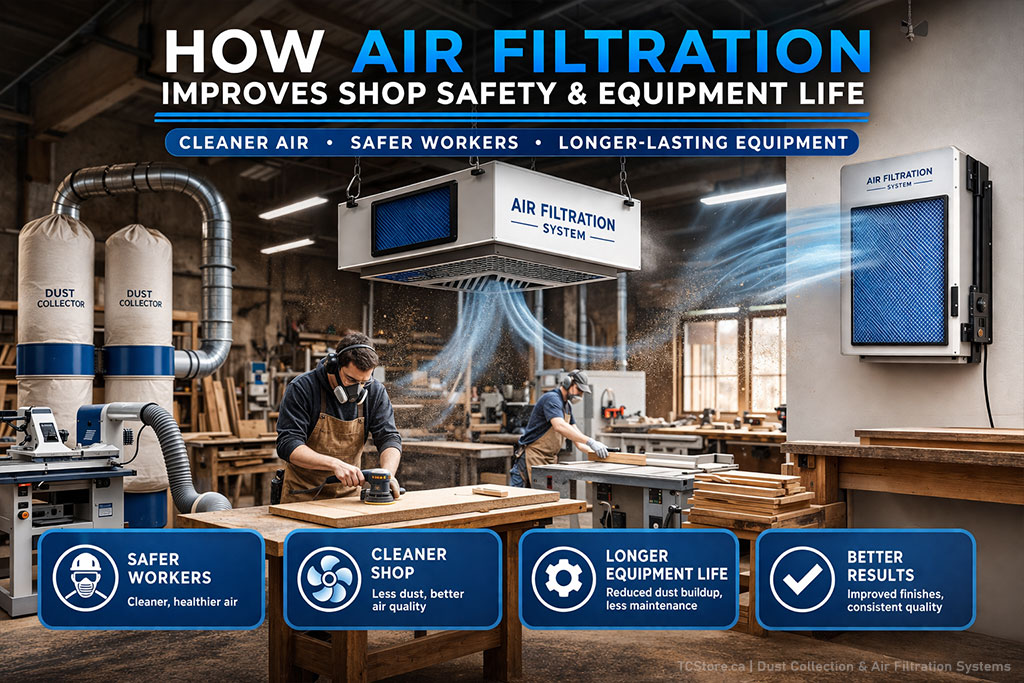
How Air Filtration Improves Shop Safety and Equipment Life
Posted by TCStore on 2026 Apr 13th
Air quality plays a major role in the performance, safety, and efficiency of any woodworking shop. While dust collection systems capture debris at the source, air filtration systems work to remove the fine airborne particles that remain in the shop environment. These smaller particles often stay suspended in the air long after machines stop running, making air filtration an important second layer of protection for both workers and equipment.
For woodworking shops focused on long-term performance, investing in air filtration systems can significantly improve shop safety, extend equipment life, and support consistent product quality.
The Hidden Problem of Airborne Dust
Large chips and debris are easy to see and collect, but fine airborne dust is often less noticeable. These particles can circulate throughout the shop and settle on machinery, materials, and work surfaces over time.
Without proper air filtration, shops may experience:
- Poor air quality throughout the workspace
- Dust buildup on machines and tools
- Increased cleaning and maintenance
- Reduced product finish quality
- Less comfortable working conditions
Fine dust can travel far beyond the machine where it was created. That is why air filtration systems help create a cleaner and more controlled environment across the entire shop.
Air Filtration Improves Worker Safety
One of the biggest benefits of air filtration systems is improved worker safety. Woodworking shops generate fine dust during sanding, cutting, routing, and machining. Over time, airborne dust can affect the comfort and cleanliness of the working environment.
Air filtration helps by:
- Removing airborne dust particles
- Circulating cleaner air throughout the shop
- Supporting better overall working conditions
- Reducing dust accumulation in breathing zones
Cleaner air helps create a more comfortable workspace and supports better productivity for teams working long hours in production environments.
Cleaner Air Improves Equipment Performance
Dust does not only affect people. It also impacts machinery. Fine dust can settle on motors, bearings, control panels, sensors, and moving components. Over time, this buildup can affect performance and increase maintenance requirements.
By using air filtration systems, woodworking shops can:
- Reduce dust buildup on equipment
- Improve machine reliability
- Reduce maintenance frequency
- Support longer equipment life
- Maintain cleaner production areas
Cleaner machines typically perform more consistently, which helps maintain production quality and efficiency.
Air Filtration Supports Better Product Quality
Dust in the air eventually settles on surfaces, including panels, components, and finished products. This can affect finishing, coating, assembly, and inspection stages. Even small dust particles can create imperfections in high-quality woodworking products.
Air filtration systems help reduce airborne dust before it settles, supporting:
- Cleaner finishing environments
- Improved surface quality
- Reduced rework and touch-ups
- Better consistency across production
For woodworking businesses focused on quality, controlling airborne dust is an important part of maintaining professional results.
Air Filtration vs Dust Collection Systems
It is important to understand the difference between dust collection systems and air filtration systems. Both play important roles, but they serve different purposes.
Dust Collection Systems:
- Capture dust at the source
- Connect directly to machines
- Remove larger debris and chips
Air Filtration Systems:
- Clean airborne dust throughout the shop
- Remove fine particles left behind
- Improve overall shop air quality
Using both dust collection and air filtration systems together provides a more complete dust control solution.
Where Air Filtration Systems Are Most Effective
Air filtration systems can be especially helpful in areas where dust tends to accumulate or remain airborne, such as:
- Sanding stations
- Finishing areas
- Assembly zones
- CNC machining areas
- High-traffic production areas
Installing air filtration in these locations helps maintain cleaner air throughout the shop.
Types of Air Filtration Systems
Woodworking shops can choose from several types of air filtration systems depending on shop size and requirements.
Common options include:
- Ceiling-mounted air filtration units
- Portable air filtration systems
- Wall-mounted filtration units
- Industrial air filtration systems for larger shops
Each type offers different advantages depending on airflow needs and shop layout.
Benefits of Air Filtration for Shop Efficiency
Cleaner air contributes to a more efficient shop overall. When dust is reduced, workers spend less time cleaning and more time focusing on production tasks.
Benefits include:
- Reduced cleanup time
- Cleaner work surfaces
- Improved organization
- Better working conditions
- More efficient workflow
These improvements help woodworking businesses maintain productivity and quality.
Choosing the Right Air Filtration System
When selecting air filtration systems, consider:
- Shop size and ceiling height
- Volume of dust produced
- Airflow requirements
- Placement options
- Maintenance and filter replacement
- Integration with existing dust collection systems
The right air filtration system should complement your existing equipment and support overall dust management.
Final Thoughts
Dust control in woodworking shops goes beyond collecting debris at the machine. Fine airborne particles can affect worker comfort, machine performance, and product quality. That is why air filtration systems play such an important role in modern woodworking environments.
By improving air quality, reducing dust buildup, and supporting cleaner production conditions, air filtration systems help create a safer, more efficient shop. For woodworking businesses looking to improve both safety and equipment life, investing in proper air filtration is a smart and valuable decision.
Frequently Asked Questions About Air Filtration
1. Why are air filtration systems important for woodworking shops?
Air filtration systems help remove fine airborne dust that dust collectors may miss. This improves air quality, supports worker safety, and reduces dust buildup on machinery.
2. Do air filtration systems replace dust collectors?
No, air filtration systems work alongside dust collectors. Dust collectors capture debris at the source, while air filtration systems remove airborne particles from the shop environment.
3. Can air filtration systems help extend equipment life?
Yes, air filtration systems reduce dust buildup on machines, which can help improve performance and reduce maintenance over time.
4. Where should air filtration systems be installed?
Air filtration systems are commonly installed near sanding areas, CNC machines, finishing zones, and other areas where airborne dust is most common.
5. How do I choose the right air filtration system?
To choose the right air filtration system, consider shop size, airflow needs, dust volume, placement options, and compatibility with existing dust collection systems.